Q: What is a standing desk?
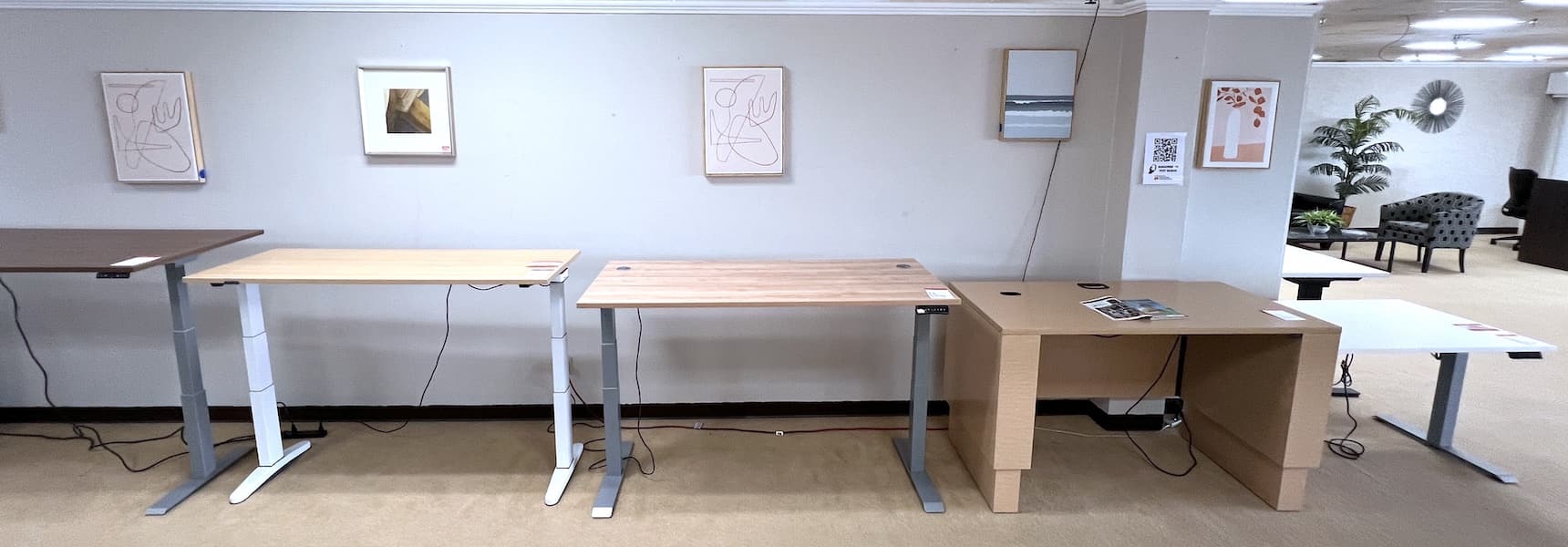
A: A standing desk, also known as a height-adjustable desk, is a desk that can go up or down manually or electronically, allowing the user to stand or sit at various heights through out the day. The entire desk may be adjustable, or it can adjust via a desk riser that is placed on top of an existing desk.
A: A standing desk, also known as a height-adjustable desk, is a desk that can go up or down manually or electronically, allowing the user to stand or sit at various heights through out the day. The entire desk may be adjustable, or it can adjust via a desk riser that is placed on top of an existing desk.
- proper posture
- blood circulation and cardiovascular health
- spinal health including back strength, reducing back pain and can alleviate pinched nerves or herniated discs
- musculoskeletal health: neck, shoulders, arms, wrist alignment, and pain
- nerve health: carpel and cubital tunnel syndrome with inflammation and blocked nerve channels, herniated and pinched spinal discs, thoracic outlet syndrome
-
being a person of tall or short stature and the standard set height causes you to strain
-
preventing further injury
- Movement is key: take time to walk around and stretch throughout the day.
- Wear proper foot beds with support and proper footwear
-
Use anti-fatigue mats underfoot
- Stretch your calf (which will prevent knots in your calf and inflammation and shortening of the plantar ligament.)